
Reviewed · ASTANA CITY TOURS
Astana: KarLag and Karaganda – Private USSR history tour
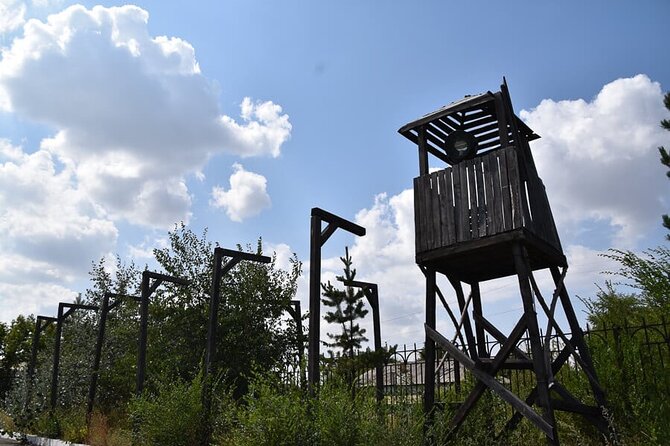
The most powerful part of this day is the KarLag Museum, where a former Soviet labor camp system becomes personal and concrete. Before reaching it, you visit Karaganda’s theaters, mining monuments, and Gagarin memorials, giving the museum visit a wider setting.
I like the private format, since your group can set the pace and ask questions without strangers in the car. I also like the mix of city sights and difficult history, plus the chance to stop for a hearty lunch in a Russian restaurant. The drawback is simple: this is a long day, with roughly five hours spent on the road.
Key points to know
- KarLag Museum in Dolinka: Spend about two hours at the main museum devoted to political repression and the Soviet labor camp system.
- Private transportation: Only your group takes part, with pickup offered from Astana.
- Karaganda’s mining identity: See the Glory to the Miners monument and the nearby Miners’ Palace of Culture.
- Soviet cultural landmarks: Visit Shalkyma Concert Hall and the K. Stanislavskiy Drama Theatre.
- A full-day commitment: The tour lasts about 10 to 11 hours, including travel time.
- Lunch included in the rhythm of the day: A Russian restaurant stop breaks up the long drive and sightseeing.
Why KarLag makes this day worth the long drive
Karaganda is about two and a half hours from Astana, and the KarLag Museum lies another 35 kilometers outside the city in Dolinka. That distance matters. You are not signing up for a quick museum visit between central-Astana attractions. You are giving a full day to a place shaped by coal mining, Soviet industry, forced labor, and political repression.
I find the subject best approached with patience. KarLag was part of the Soviet labor camp system associated with Stalin. The museum explains how the camps operated and gives human weight to a period that can otherwise feel remote or abstract. Its setting in Dolinka adds to the sense of place. You are not only reading about a camp network in a capital-city gallery. You are going out into the region connected to it.
The museum is scheduled for about two hours, which is useful. A shorter stop could feel rushed, especially with such serious material. You have enough time to look at the displays, listen to your guide, and absorb the story without treating the visit like a quick photo stop.
This is not light sightseeing. The museum focuses on suffering, repression, and the machinery of the Soviet camp system. I would choose it for a genuine interest in 20th-century history, not simply because it fills an empty day outside Astana.
More astana city tours in Nur Sultan:
- Astana City Tour: Private Full Day with Lunch and Comfort Pickup
★ 5.0 · 98 reviews - Astana: Burabay Oasis Private Tour+ Lunch+ Pickup+ Bonus Activity
★ 5.0 · 75 reviews - Private Half-Day City Tour of Astana in Comfort
★ 5.0 · 46 reviews
The road from Astana to Karaganda
The drive takes about two and a half hours each way, making transportation a major part of the experience. Because the tour is private, your group travels together rather than joining a large coach. Pickup is offered, and the mobile ticket makes the booking side easy, but the main practical question is stamina.
A 10 to 11-hour tour can feel very different depending on your expectations. If you want a relaxed city walk with long café breaks, this is not that kind of outing. If you enjoy using a day to reach a place that would be difficult to visit independently, the travel time is part of the value.
The road journey also helps you understand the distance between Astana, Kazakhstan’s modern political center, and Karaganda, an industrial city with a very different identity. The tour does not present Karaganda as a polished postcard destination. Instead, it introduces a working city shaped by mines, Soviet planning, cultural institutions, and painful memories.
Bring a little patience for the road. The day is long, and the museum visit carries emotional weight. The reward is a more grounded view of central Kazakhstan than you would get by staying in Astana.
Shalkyma Concert Hall and Gagarin’s monument
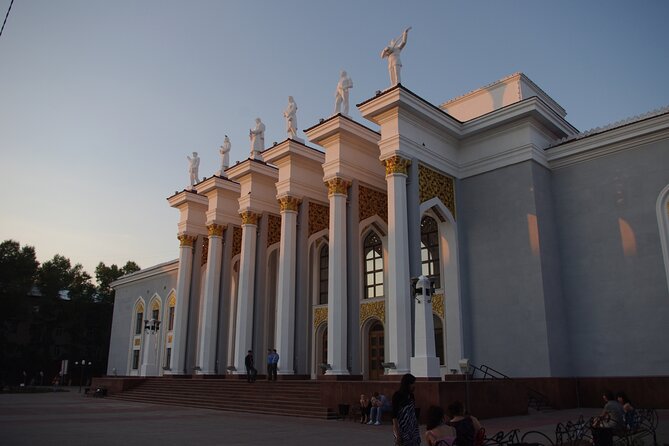
The first stop is Shalkyma Concert Hall, where the tour begins its look at Karaganda’s public architecture and civic spaces. The stop lasts about 20 minutes and admission is free, so expect an exterior visit and time for photographs rather than a performance.
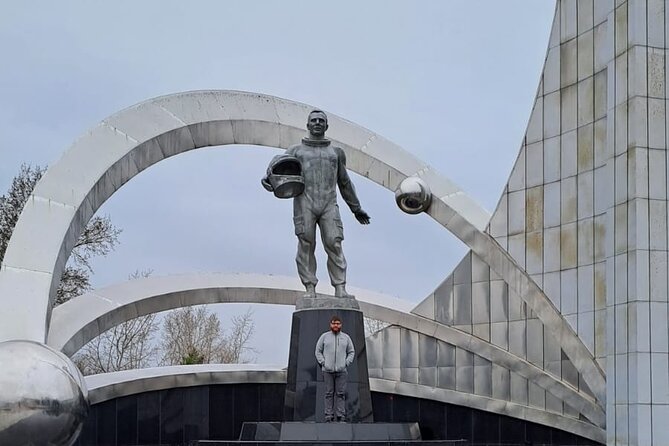
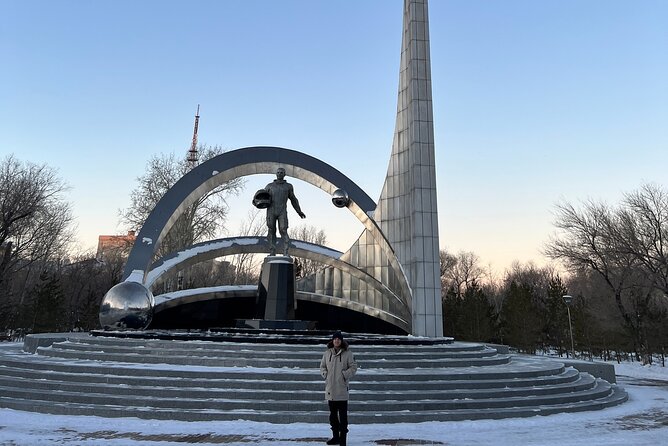
Nearby, you see a monument to Yuri Gagarin, the Soviet cosmonaut whose name remains familiar across the former Soviet world. An alley also leads to a monument honoring Abay Kunanbayev, one of Kazakhstan’s most important poets. These nearby landmarks create a useful contrast: Gagarin represents Soviet scientific ambition, while Abay points toward Kazakh literature and national culture.
I like this opening because it gives you more than a single type of Soviet monument. You see how public memory in Karaganda includes Soviet achievement, Kazakh identity, and the city’s own cultural life.
The limitation is the short schedule. Twenty minutes is enough to orient yourself and take photographs, but not enough for a slow architectural study. Keep your expectations practical and use the stop to get your bearings before the more focused history visits.
K. Stanislavskiy Drama Theatre, a brief cultural stop
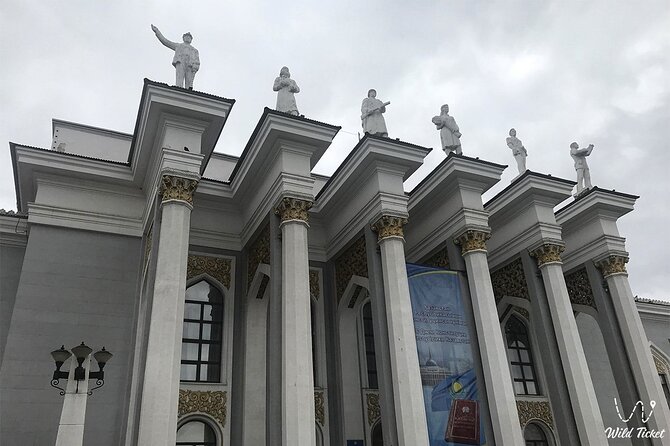
The K. Stanislavskiy Drama Theatre opened in 1930 and is described as one of the first Russian drama theaters in Kazakhstan. The building continues to serve its original purpose, which gives the stop a direct link between Soviet-era cultural planning and present-day public life.
You have about 10 minutes here, with no admission charge. That makes this another quick exterior stop. I would pay attention to the building’s role rather than expect a full theater tour. The point is to see how drama and performance were built into the civic structure of Karaganda during the early Soviet period.
For some people, this will be a pleasant but minor stop. The KarLag Museum is the main reason to book the day, and the theater does not receive the same amount of time. Still, it helps build a fuller picture of the city. Karaganda was not only a mining settlement. It also had theaters, concert halls, monuments, and a cultural program meant to serve its growing population.
A few more Nur Sultan trips to weigh up
- Ancient petroglyphs of Tanbaly – UNESCO World Heritage
★ 5.0 · 18 reviews - Almaty City Tour: A Journey Through Culture, History, and Nature
★ 5.0 · 8 reviews - Almaty Hightlights Tour: Discover Culture, Nature, and History
★ 5.0 · 6 reviews - Astana: 2-Day 1-Night Ranch Stay & Tour Historic Mausoleum
★ 3.9 · 3 reviews
Glory to the Miners and the city’s industrial identity
The 30-minute stop at the Glory to the Miners monument brings the city’s coal-mining past to the front. The monument faces the Miners’ Palace of Culture, creating a clear pairing of labor and civic life.
This is one of the most useful places to pause and think about Karaganda’s identity. Coal was central to the city’s development, and mining shaped its economy, public monuments, and sense of pride. The monument is not a random decoration. It reflects the work that helped make Karaganda an industrial center.
Half an hour gives you time for photographs and an explanation from your guide. It should also leave room to look across at the Miners’ Palace of Culture and consider how Soviet cities celebrated labor in monumental form.
The stop may feel familiar if you have already seen Soviet worker statues elsewhere. The value comes from the local setting. Here, the mining theme is tied directly to Karaganda rather than presented as a generic Soviet symbol.
The phrase behind Gde-Gde? V Karagande!
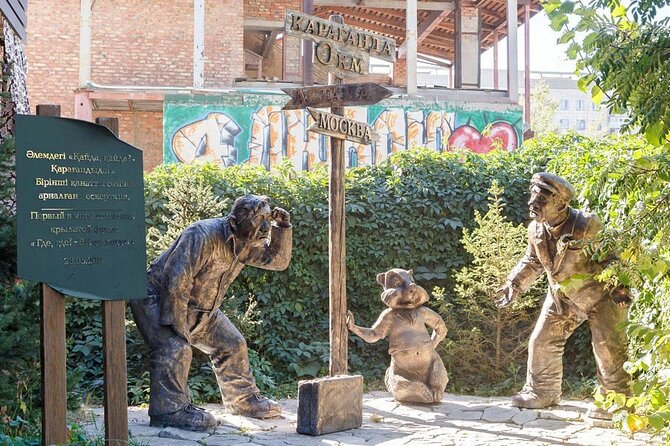
The next stop deals with a phrase familiar to Russian speakers: Gde-gde? V Karagande!, meaning Where, where? In Karaganda! Today it is used humorously to suggest a far-off or unlikely place. Its darker association comes from KarLag, although the phrase has taken on a life of its own.
The tour allows about an hour here, making it the longest city stop. That gives your guide room to explain the phrase, connect it to Karaganda’s public identity, and let you spend time with the monument and surrounding area.
I like this stop because it shows how history can move into everyday speech. A place linked to fear and exile became part of a joke used by Russian speakers. That contrast is uncomfortable, but it is also revealing. It shows how people remember difficult places in different ways, sometimes through humor and shorthand rather than formal memorial language.
This is also a good point to ask questions. Since the group is private, you can pause over the meaning of the phrase and its connection to KarLag. With a guide such as Amir, you have more room for explanation than you would on a tightly managed group circuit.
Do not expect an hour of nonstop sightseeing at one monument. The stop is better understood as a chance to connect language, local memory, and the city’s camp-era reputation before you visit the museum itself.
Inside the KarLag Museum in Dolinka
The KarLag Museum of Political Repression Victims’ Memory is the heart of the tour. It is located in Dolinka, about 30 minutes from central Karaganda, or roughly 35 kilometers outside the city.
The museum covers the history of the KarLag labor camp system and the people affected by political repression. The material is serious and detailed. You should allow yourself time to read, listen, and look closely rather than race through the rooms for a quick overview.
The two-hour visit is one of the strongest features of the day. It gives the subject room to breathe. A brief stop might leave you with only a name and a few stark images. Two hours can help you understand the system, its victims, and the role the camps played in the region.
This is also where the guide matters most. The museum supplies the setting and displays, but a private guide can help connect the information to the places you saw earlier. The mining monuments, the city’s Soviet cultural buildings, and the KarLag story are not separate topics. Together, they explain how Karaganda grew and why its past is so layered.
Expect the museum to be emotionally heavy. I would not plan another demanding attraction immediately afterward. The official schedule places lunch within the day, and that pause is useful. A meal gives you time to process what you have seen before returning to Astana.
Lunch and the practical rhythm of the day
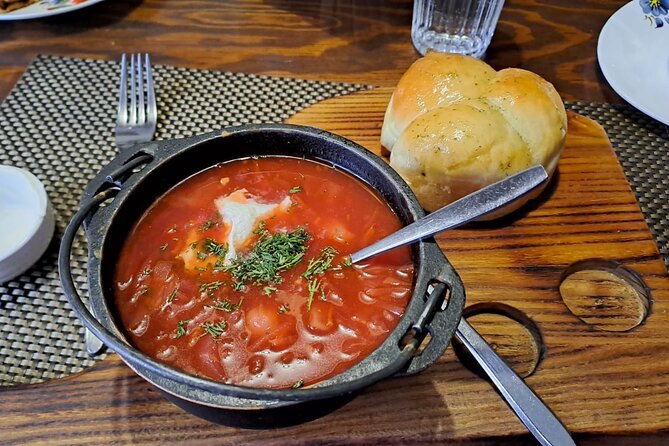
Lunch is described as taking place at a Russian restaurant, and the meal helps break up the long schedule. A good lunch matters here because the tour includes substantial driving, several city stops, and a two-hour museum visit.
The meal is not the main attraction, but it adds comfort and a local rhythm to a day otherwise centered on monuments and difficult history. One especially useful detail is that the food was praised as delicious, so you can expect lunch to be treated as a proper part of the outing rather than an afterthought.
Because the tour lasts 10 to 11 hours, start the day ready for a full schedule. Wear comfortable clothing and shoes suitable for walking through museum spaces and around monuments. The supplied details do not specify a dress code, exact restaurant menu, or special equipment, so do not build your plans around those details.
Families can consider this tour, too. Children enjoyed the day on one reported booking, but the KarLag Museum deals with serious material. Parents should decide how much of that subject their children can handle and explain the nature of the visit in advance.
What the $199 price means for a private day
At $199 per person, this is not a budget sightseeing bus. The value depends heavily on how many people are in your group and how much you value private transport and a dedicated guide.
For a private day from Astana to Karaganda and Dolinka, the price covers more than admission to one museum. You are paying for the long round trip, the city sightseeing, the museum visit, and the ability to travel only with your own group. Museum admission is included, and group discounts are offered, so the per-person cost may look better when several people book together.
The private format is especially useful for history-focused travelers who want to ask questions. It also helps families and small groups avoid the fixed pace of a large tour. You can use the short city stops for photographs and save your attention for the museum.
The value is weaker if you dislike long drives or have little interest in Soviet history. Karaganda’s attractions are spread across a broad area, and the day is built around reaching them. Someone seeking only a quick look at the city could find the price and duration hard to justify.
Who should book this Karaganda and KarLag tour?
I would recommend it most strongly to you if you have an interest in:
- Stalin-era repression and Soviet camp history
- Kazakhstan’s Soviet past
- Industrial cities and coal-mining culture
- Soviet architecture, monuments, and public memory
- Private day trips with a small group
- Visiting places that are difficult to arrange on your own from Astana
It also suits families with older children who can engage with serious history. The private setting gives parents more control over questions and pacing, though the museum’s subject remains difficult.
I would hesitate to recommend it to you if your ideal day means very little driving, long independent walks, shopping, or a light cultural program. The sightseeing stops in Karaganda are relatively short except for the one-hour phrase and monument visit. The museum is the focus, not a small add-on.
Booking details worth keeping in mind
Confirmation is provided at booking, and most people can take part. The tour is private, so only your group participates. Pickup is offered, which is useful for a day that begins early and ends after a long return drive.
Free cancellation is available if you cancel at least 24 hours before the start time. Changes or cancellations made within 24 hours are not accepted for a refund. The experience also requires good weather. If poor weather forces cancellation, you will be offered another date or a full refund.
The tour is listed from Nur-Sultan, while the experience title refers to Astana. When arranging pickup, confirm the exact meeting point and local start time so the long day begins smoothly.
Should you book the KarLag day trip?
Book this tour if you want the serious side of Kazakhstan, not only its grand new capital. The KarLag Museum gives the day its purpose, while Karaganda’s monuments and theaters add context about mining, Soviet public life, and local identity.
The strongest reasons to go are the private format, the two-hour museum visit, and the chance to connect Karaganda’s industrial monuments with the history of political repression. Guide Amir is specifically associated with a well-planned day, and the Russian restaurant lunch adds a welcome pause.
Skip it if a five-hour round trip sounds exhausting or if labor-camp history is not a subject you want to spend a full day confronting. For the right person, though, the $199 price buys access to a difficult and important part of central Kazakhstan that is not easily covered in a short city tour.
FAQ
How long does the Astana to Karaganda and KarLag tour last?
The experience lasts approximately 10 to 11 hours, and travel time is included in that total.
How far is Karaganda from Astana?
Karaganda is located about two and a half hours from Astana by road.
Where is the KarLag Museum located?
The museum is in Dolinka, about 35 kilometers outside Karaganda. The drive from Karaganda to the museum takes about 30 minutes.
Is this a private tour?
Yes. Only your group participates in the private tour or activity.
Is hotel or other pickup available?
Pickup is offered. The supplied details do not specify exact pickup locations, so confirm the meeting point when booking.
Is admission to the KarLag Museum included?
Yes. Admission to the KarLag Museum is included. The city monument and theater stops listed for the tour have free admission.
Can I cancel for a full refund?
Yes, if you cancel at least 24 hours before the experience start time. Cancellations or changes made less than 24 hours before the start time are not accepted for a refund. If poor weather cancels the tour, you will be offered a different date or a full refund.
Just added around Nur Sultan
- The Old City Tour★ 5.0 · 3 reviews
- Astana Private Custom Walking Tour with A Local Guide★ 4.0 · 3 reviews
- Half Day Private Astana City Tour in Comfort★ 5.0 · 5 reviews
- Tour to Burabay National Park★ 4.5 · 6 reviews
- Half-Day Private Tour to Alzhir Camp from Nur-Sultan★ 5.0 · 6 reviews
- Half Day (3 hours) City Tour★ 5.0 · 6 reviews
- Private Transfer from Nursultan Nazarbayev (NQZ) Airport to Astana★ 5.0 · 6 reviews
- Private Comfort Burabay Nature Tour: All included★ 5.0 · 8 reviews
Astana City Tours, compared.
Astana City Tour: Private Full Day with Lunch and Comfort Pickup
Read our review →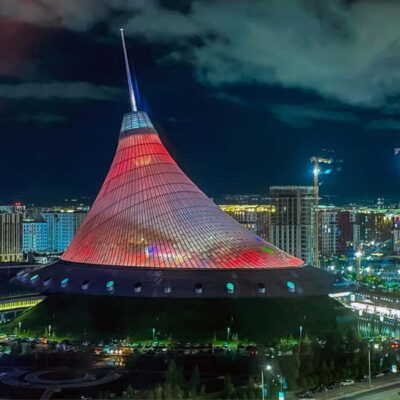
Astana City Tour: Explore Night City with a Certified Guide
Read our review →
Burabay Oasis Private Tour+ Lunch+ Pickup+ Bonus Activity
Read our review →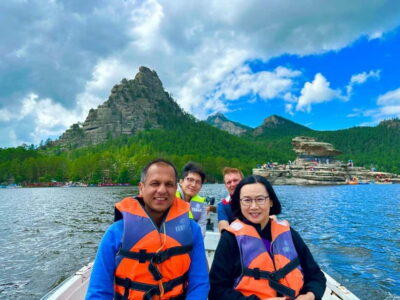
Burabay National Park Tour with Lunch and Pickup
Read our review →
Astana City Tour: Authentic Private Full Day with Lunch + Pickup
Read our review →Browse the lists this tour appears in